Cliques
Cliques
Buy on AmazonAs an Amazon Associate we earn from qualifying purchases. This costs you nothing extra.
Every day in every school in every community across this country, children are mocked by their peers, making life for the victims unbearable. Ask middle or high schoolers what its like to be in school and chances are they will say its a miserable place because of all the teasing, bullying, and shunning. Perhaps the best evidence is the stories that you hear from your own children, or the memories you have from your own childhood. Children, parents, and teachers alike know cliques are a problem. But how do we help?
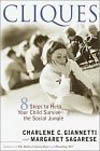
Cliques: 8 Steps to Help Your Child Survive the Social Jungle by Charlene C. Giannetti and Margaret Sagarese has answers. The first book to focus on this volatile problem, Cliques provides hands-on strategies and ideas for dealing with this destructive social situation. Parenting experts and authors of the highly-acclaimed The Roller-Coaster Years and Parenting 911 Giannetti and Sagarese have created eight steps to help your child belong and to change the climate of cruelty in our schools.
"Our children cant be expected to turn the tide of teasing and of clique cruelty around all by themselves," Giannetti and Sagarese write. "We have to show them how. We have to take the time to work with them to loosen the strait jackets, soften the talk, and open up their hearts."
The first things to do is help your child define where he or she falls in the schools social hierarchy and what impact that has on his or her personal acceptance. Giannetti and Sagarese dissect the four basic social cliques as: the popular clique, the fringe, middle friendship circles, and the loners. Once youve identified how your child fits into the scene, you can use the activities, dialogues, and behind-the-scenes maneuvers outlined in the eight steps to help ease the social conflict your child might be suffering:
- Step One: Help Your Child Belong. Learn how to validate your childs need to join the group without leaving your influence behind; lead your child on a few information-gathering missions to give her a social edge; offer a daily dose of "belonging instructions."
- Step Two: Help Your Child Control Emotions. Get the tools to construct a "feelings" dictionary that describes your childs moods; create a dialogue to encourage your child to articulate his feelings; cast a future strategy to anticipate and head off destructive feelings.
- Step Three: Disarm Your Bully. Get help understanding how bullies manipulate peers through cliques; evaluate objectively your childs behavior; develop behavior modification exercises with your child.
- Step Four: Empower Your Victim. The authors will show you how to use a checklist to recognize if and when your child is being victimized; look at the impression your child makes and change it I necessary; direct your adolescent toward experiences tailored to enhance social competence and social intelligence.
- Step Five: Get Your Bystander to Participate. This chapter will make you aware of the important role the bystander plays in clique-land; give you ways to talk with your child about getting involved; turn your child into a catalyst for change.
- Step Six: Teaching Your Child Tolerance. In this step the authors will explain what role intolerance plays in cliques; give you ways to teach your child to be accepting of other peoples differences; deliver a wake-up call so that you can examine your own prejudices.
- Step Seven: Lead by Example. You will be shown how to model friendship in a positive, not negative, light; identify and remove antisocial formulas form your family life; test your parenting style on a pivotal issue.
- Step Eight: Lobby for Change. In the final chapter the authors will alert you to a notorious turnoff that could easily sabotage your efforts; prime you with a one-two-three approach based on the expertise of professional lobbyist and activists; expose you to a variety of possible programs.
In the wake of tragedies like the shooting at Columbine High School in Colorado, its obvious that the issue of cliques is one that parents and teachers must address, and Giannetti and Sagareses tools can assist in this effort. More than just a manual for cheering children on, Cliques brings a truly comprehensive understanding of adolescent society to the millions of teenagers and their families struggling with the force of social division.
"This book is a mandate to change the climate in our schools from cruel to kind. Ours is a call to arms that emphasizes reaching out with our arms to children to help them battle cliques," Giannetti and Sagarese write. "One parent at a time, one child at a time, one community at a time, we can cure the social disease that has been running wild."